
The Story of the Willow Pattern: A Timeless British Classic with Chinese Origins
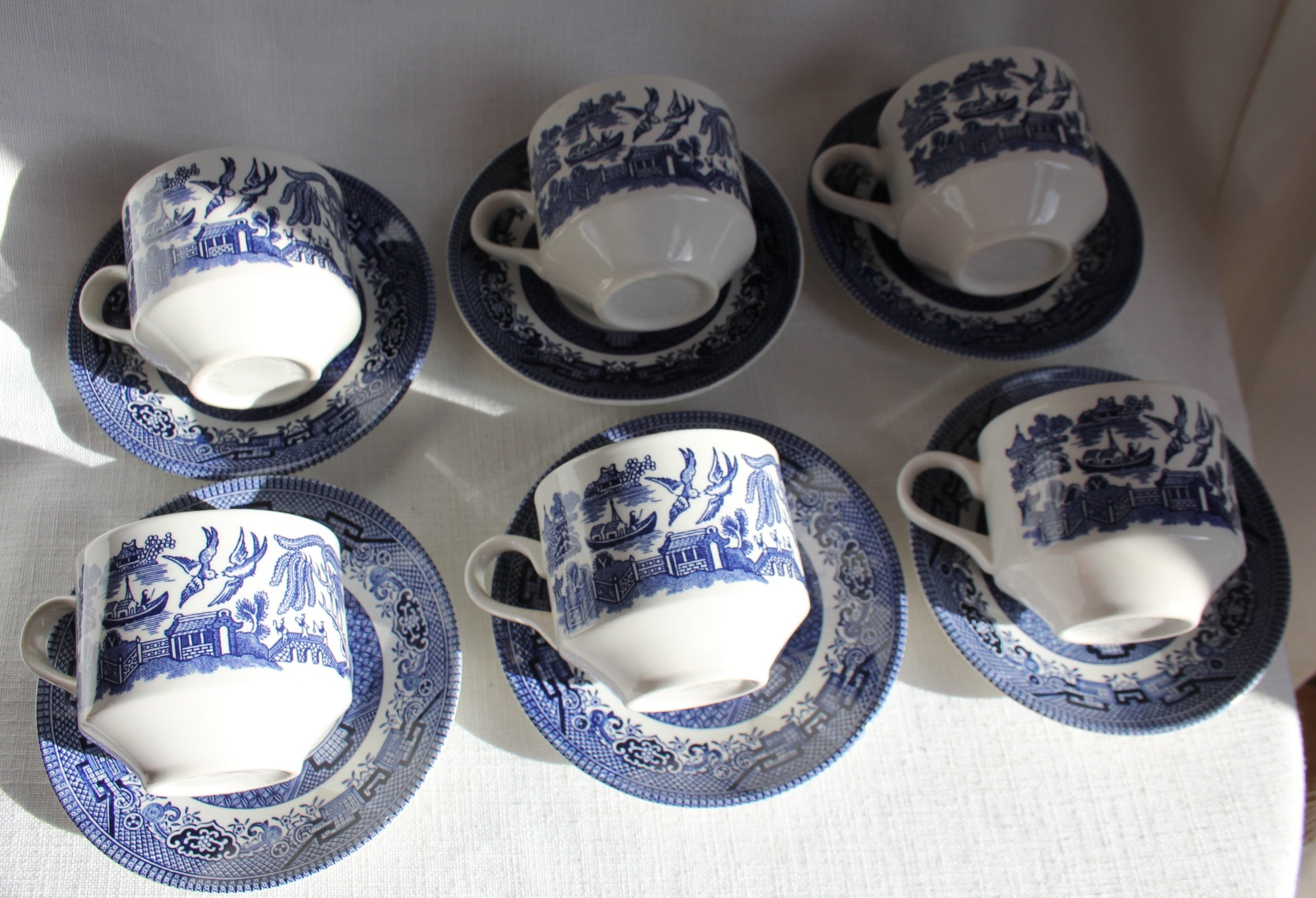
For quite sometime I've been a fan of blue and white Willow Pattern china. The Blue and white Willow Pattern tableware is often seen as a symbol of traditional British design. Found on plates, dishes, and tea sets displayed proudly on kitchen dressers across the UK, this iconic pattern has a fascinating story that stretches back thousands of years and across continents. For me, it started with one or two plates and has been an ever-evolving obsession ever since. It is often said that blue and white Willow Pattern transferware is the gateway to collecting vintage and antiques.
The Origins: Chinese Porcelain aka "white gold"...
The story of the Willow Pattern begins in ancient China. Around 2,600 years ago, Chinese artisans developed porcelain, a fine ceramic made from kaolin clay. Its smooth, white, almost translucent finish made it unlike anything seen before.
By the 14th century, Chinese potters began decorating porcelain with cobalt blue pigment, giving rise to the classic blue and white pottery style that would later inspire the Willow Pattern. When Chinese porcelain began arriving in Europe in the early 1600s, it caused a sensation. Europeans had only been able to produce ceramics from darker clays, so the delicate white porcelain seemed extraordinary. These imports were so valuable they earned the nickname “white gold.”
Delftware: Europe’s First Imitation
Unable to reproduce Chinese porcelain, European potters developed an alternative: Delftware, which is still very popular today. This involved coating earthenware with a white tin glaze and decorating it with blue designs, often inspired by Chinese motifs.
Originating in Delft in the Netherlands around 1620, this style spread across Britain and Europe. Although it wasn’t true porcelain, it satisfied the growing demand for blue and white ceramics.
In 1710, the Meissen factory in Germany finally cracked the secret of making porcelain using local kaolin clay. This marked a turning point, allowing European manufacturers to compete with Chinese imports, though the appeal of Asian-inspired designs remained strong.
Inspired By Dramatic Romance
The Willow Pattern features a stylised landscape inspired by traditional Chinese “estuary scenes.” These features include a pagoda-style building, a bridge with three figures crossing, a boat on the water, two birds flying overhead, a weeping willow tree, and decorative borders framing the entire scene.
The design is also tied to a romantic legend popularised in 1849 through a story titled “The Story of the Common Willow Pattern Plate.” This tale tells of Koong-se, the daughter of a wealthy Mandarin, who falls in love with Chang, her father’s assistant. Forbidden from being together, the couple flee, pursued by her father and a powerful Duke. Although they initially escape and build a life together, they are ultimately discovered and killed.
In a final act of compassion, the gods transform the lovers into two doves, represented in the pattern as the birds flying above. Many details of this story are reflected in the design, from the fleeing figures on the bridge to the boat and the distant island where they once lived.
The Birth of the Willow Pattern
The specific design we now recognise as the Willow Pattern is believed to have been created around 1780 by Thomas Minton for Thomas Turner’s Caughley factory in Shropshire.
Shortly after, Minton moved to Spode in Staffordshire, where the pattern gained widespread popularity.
Mass Production and Popularity
The Willow Pattern’s widespread success was made possible by transfer printing, a technique developed in Liverpool in 1756. This allowed intricate designs to be applied quickly and cheaply to ceramics.
By the late 19th century, Willow Pattern tableware was being mass-produced across Britain. It remained hugely popular throughout the 20th century and became a staple of British homes. Today, the Willow Pattern remains an enduring symbol of British ceramic heritage. Modern manufacturers still produce updated versions, ensuring this historic design continues to be appreciated by new generations.