
Just Sourced: Lancashire Independent College, Rock & Co London Antique Print
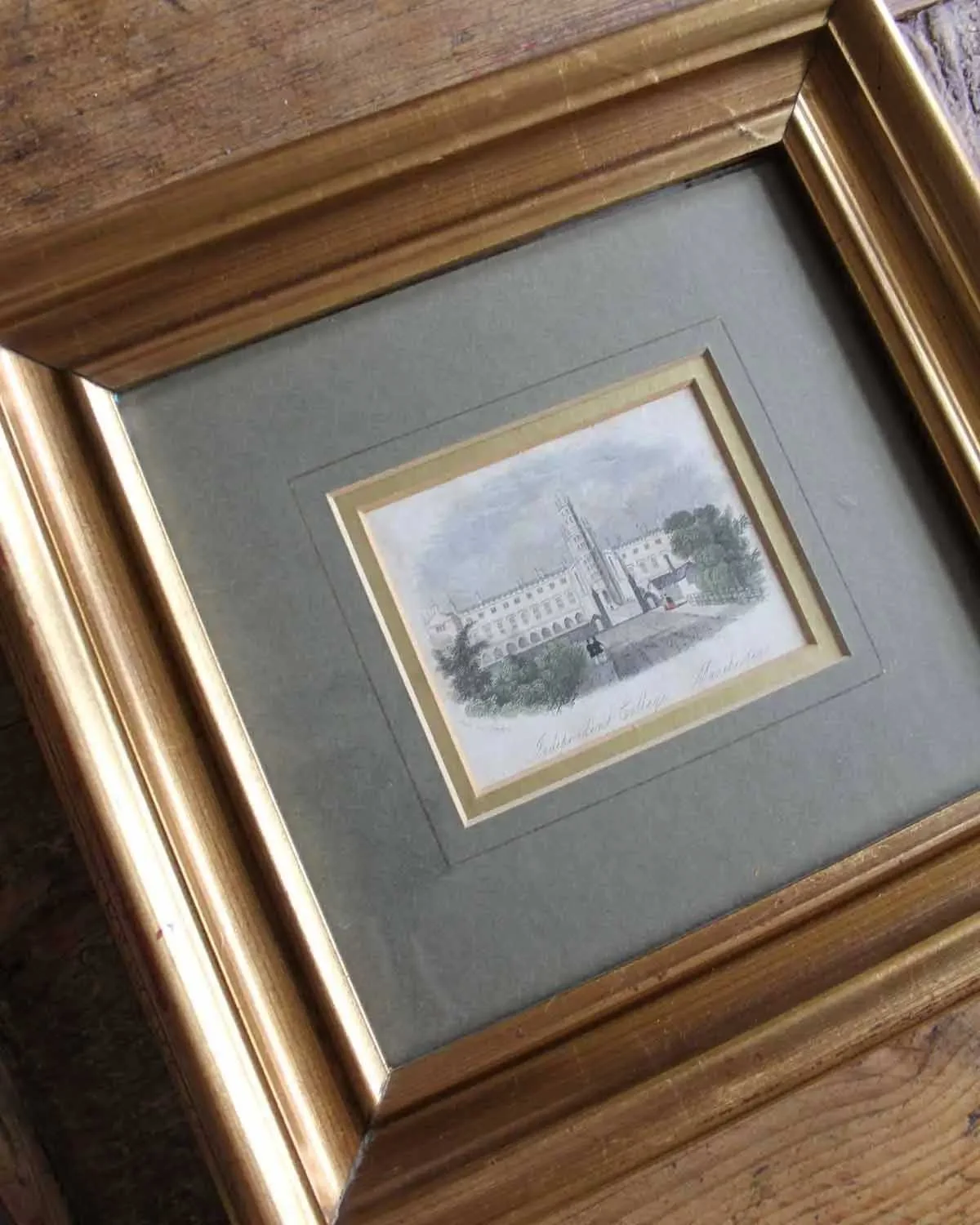
The Lancashire Independent College in Whalley Range has a rich history, initially serving as a college for non-conformists, later becoming the GMB National College, and currently operating as the British Muslim Heritage Centre. We found this print recently on one of our regular rummages and fell in love with it.
Rock & Co. London
Noted on the bottom left of the picture is the name Rock & Co, London. According to The British Museum, Rock & Co were a London based print and playing-card publisher, specialising in topographical prints on pictorial note paper; produced over 7000 topographical prints which were numbered on the plate.
By the middle of the 19th century Rock & Co. had achieved prominence as a prolific publisher of steel engraved vignette images, producing views for a large number of localities. These illustrations were published in the form of cards, fancy stationery, and books and booklets and the were usually numbered and dated within the border of the engraving. Until around 1880, books with steel line-engraved vignettes were being produced.
Lancashire Independent College History
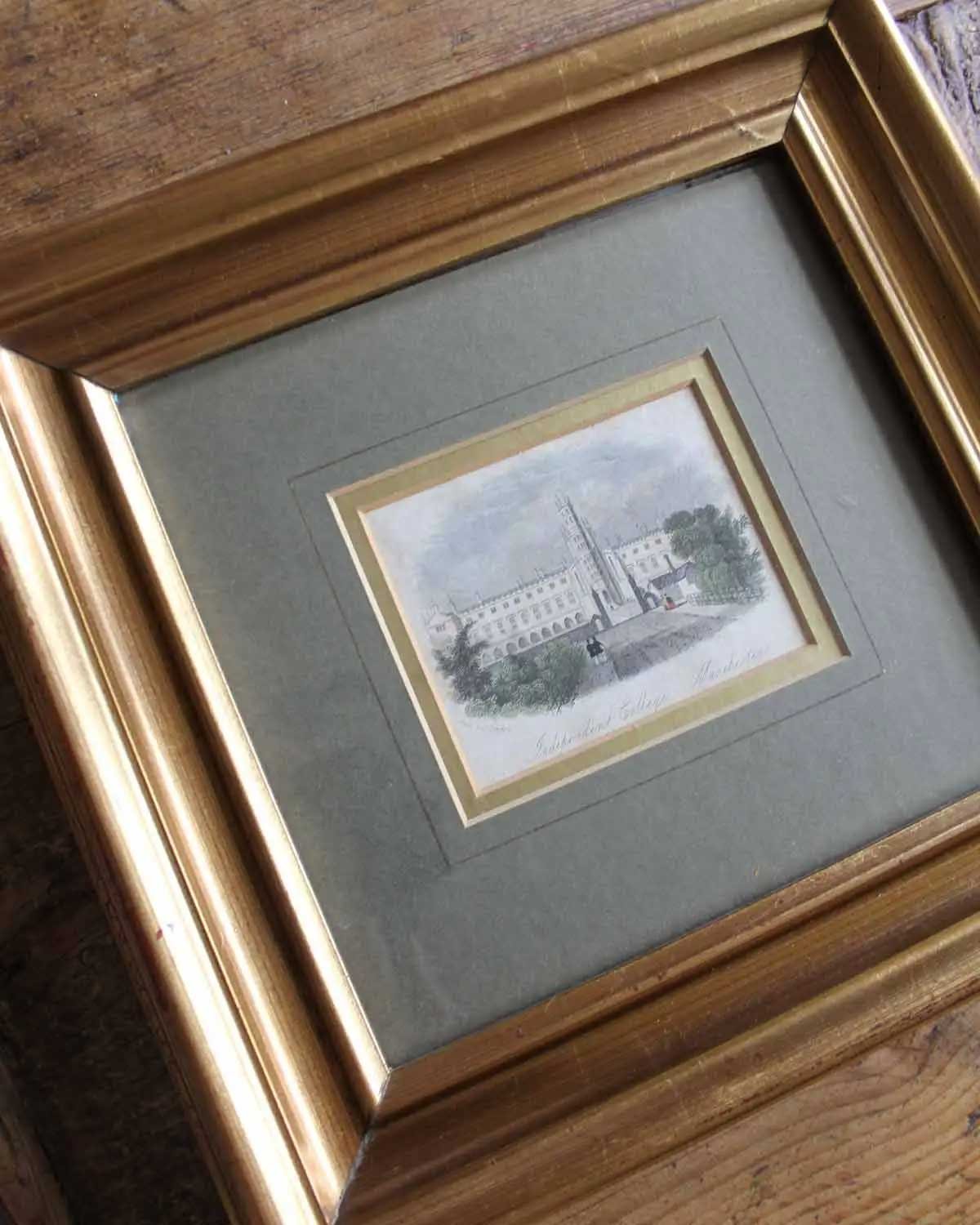
Also marked along the bottom of the picture is 'Manchester Independent College', known also as 'Lancashire Independent College'. The college, constructed between 1840 and 1843 by architects Irwin and Chester, was built in the newly developed suburb of Whalley Range. This new neighbourhood had been undergoing development for about a decade prior to the college's establishment.
The Lancashire Independent College, a brainchild of the Lancashire Congregational Union, aimed to provide higher education opportunities for Non-Conformists who were previously excluded from the prestigious Universities of Oxford and Cambridge until 1871. The similarity of design to an Oxbridge college is therefore easily understood.
In the midst of World War II, the college played a significant role in sheltering refugee academics, primarily from Czecho-Slovakia. These scholars sought refuge within its walls, finding solace and safety amidst the chaos of war. As the 20th century progressed, the building underwent a transformation, becoming the national college of the GMB (General, Municipal, Boilermakers, and Allied Trade Union). It served as a training ground for numerous trades-union negotiators, contributing to the development of skilled labourers in the country.
However, as time went on, the GMB made the difficult decision to sell the college in 2004 due to the escalating costs of maintenance. This led to a period of uncertainty for the historic building, leaving its future hanging in the balance. Eventually, the British Muslim Heritage Centre stepped in and purchased the college, recognising its potential to serve as a focal point for Muslim heritage and identity in Britain. With this new purpose, the college embarked on a new chapter, embracing its rich history while embracing the diverse cultural heritage of the Muslim community.
This beautiful depiction of the Lancashire Independent College by Rock & Co London really captures the rich history of such a magnificent building.